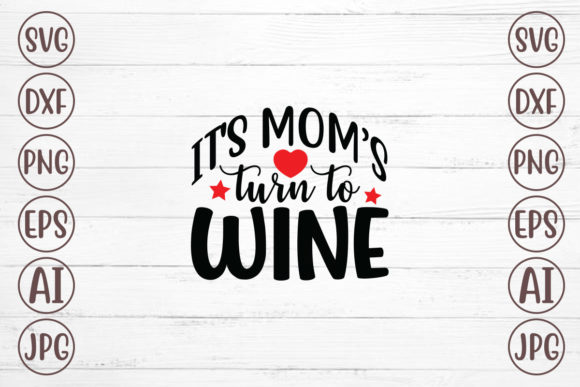
Reviewing It’s Mom’s Turn to Wine for Embroidery
As a designer who has spent countless hours digitizing and testing patterns, I approach every new machine embroidery design with a mix of curiosity and caution. We all know that what looks crisp on a computer screen does not always translate perfectly to thread and fabric. Recently, I evaluated It s Mom’s Turn to Wine, a humorous quote graphic intended for various creative applications. While the product description highlights its versatility for t-shirts, mugs, and serving trays, my focus was strictly on how this asset performs in real-world embroidery scenarios.
First Impressions and Visual Personality
The immediate appeal of It s Mom’s Turn to Wine lies in its relatability. It captures a specific, lighthearted mood that resonates with a broad audience, particularly in the realm of personalized gifts and boutique branding. Visually, the design relies on typography and layout rather than complex imagery. For an embroidery project, this is a double-edged sword. Text-based designs require impeccable spacing and font weight to remain legible after stitching.
Upon reviewing the included files, specifically the SVG and Ai formats provided in the zip archive, I noted that this is primarily a vector graphic resource. This distinction is crucial. As an experienced reviewer, I must clarify that these are Graphics files, not pre-digitized embroidery files like PES or DST. This means the user, likely a craft business owner or hobbyist, will need to digitize the design themselves or use software to convert these vectors into stitch data. This offers creative control but demands technical skill.
Real-World Application: The Custom Tote Test
To understand the practical value, I imagined applying this design to a heavy-canvas tote bag, a popular item for Etsy sellers and small shop products. The phrase suggests relaxation and humor, making it ideal for casual accessories. When planning such a custom apparel or accessory project, the scale of the text becomes the primary concern. If the letters are too thin, they may disappear into the weave of the fabric. If they are too dense, the fabric might pucker.
In a hypothetical production run for a holiday gift or a mother’s day promotion, this design would work best as a focal point on the front panel of a tote or the chest of a sweatshirt. The humor drives engagement, potentially increasing buyer interest for handmade products. However, because the source files are vectors, you have the flexibility to adjust the size before digitizing. This allows you to optimize the layout for different hoop sizes, ensuring the text remains balanced and readable.
Technical Considerations for Stitching
Since It s Mom’s Turn to Wine is provided as AI and SVG files, the responsibility for stitch type selection falls on you. Here is how I would approach the digitization process for optimal results:
- Font Weight and Stitch Type: For the lettering, I recommend using a satin stitch for larger text to give it a premium, raised look. For smaller details or thinner fonts, a running stitch or a narrow fill stitch might be necessary to prevent thread breaks and ensure clarity.
- Stitch Density: Be mindful of density. Over-digitizing can lead to stiff patches on soft fabrics like baby clothes or lightweight tees. Aim for a balanced density that covers the fabric without causing distortion.
- Stabilizer Selection: Given that this design will likely be used on varied materials, from cotton aprons to polyester caps, choosing the right stabilizer is non-negotiable. A cut-away stabilizer is often safer for garments that will undergo frequent washing, while tear-away might suffice for stable home decor items like pillow covers.
Navigating Fabric and Surface Challenges
Not all surfaces are created equal. While the description mentions mugs and glasses, those applications typically involve sublimation or vinyl, not embroidery. For textile applications, consider the texture. Embroidering on textured fabrics like terry cloth towels requires careful attention to detail. Small serifs or intricate curves in the font may get lost. In such cases, simplifying the design or increasing the overall size is advisable.
Curved surfaces, such as caps or hats, present another challenge. The design must be centered perfectly, and the digitizing should account for the curvature to prevent visual distortion. If you are creating an embroidered patch to apply later, you have more freedom to experiment with dense fill stitches and backing materials, ensuring a professional finish that holds up to wear and tear.
Commercial Viability and Brand Consistency
For commercial embroidery projects, consistency is key. Using a consistent font style and layout helps build brand recognition. It s Mom’s Turn to Wine fits well within a niche of humorous, lifestyle-oriented products. It appeals to customers looking for unique, conversation-starting items. However, before listing finished products on platforms like Etsy, you must verify the licensing terms associated with the graphics. Ensure that your use of the vector files complies with the creator’s policy for commercial sales.
Additionally, consider the thread colors. A high-contrast combination, such as white thread on a navy tote or gold on black, enhances readability. Test your digitized file on scrap fabric first. Check for thread breaks, nesting, and overall aesthetic appeal. A quick test stitch can save hours of rework and protect your reputation as a quality provider of handmade goods.
Final Verdict for Designers and Makers
It s Mom’s Turn to Wine is a versatile graphic asset that holds significant potential for creative entrepreneurs. Its strength lies in its emotional connection and adaptability. However, it is not a plug-and-play embroidery file. It requires thoughtful digitization and testing. By paying attention to stitch density, fabric choice, and stabilizer support, you can transform this simple quote into a high-value embroidered product. Whether for a personalized gift, a boutique clothing line, or a seasonal craft fair item, this design offers a solid foundation for those willing to put in the technical effort to execute it well.